
What is Pa-Kua?
Pa-Kua is a traditional body of knowledge of Chinese origin that studies the laws of change and their application to the integral development of the human being.
At the International Pa-Kua League, we transmit this knowledge in a practical way through an educational system organized into different Masteries. Through training, study, and experience, we help students of all ages strengthen the body, focus the mind, develop character, and acquire tools to live with greater health, balance, confidence, and responsibility.
In Pa-Kua, students do not simply learn techniques. Each class represents an opportunity to know themselves better, discover new abilities, overcome their own limitations, and prepare to face the challenges of life.
Our system does not promote competition between people. We understand that each student has different abilities, experiences, and needs. Therefore, the true goal is not to surpass others, but to progress in relation to oneself.
Pa-Kua promotes personal growth
The world is constantly changing, and people need to learn how to adapt without losing their balance.
We live in an age of major technological advances and permanent access to information, but also of sedentary lifestyles, isolation, excessive stimulation, and difficulty in facing everyday challenges.
Pa-Kua responds to this need through training that integrates body, mind, and character. Its practice helps develop physical, mental, and human capacities that can be applied in family, professional, and social life.
Knowledge for a better life
- act with confidence and responsibility;
- take care of their health;
- remain calm in the face of difficulties;
- take on commitments;
- persevere in the face of challenges;
- relate to others with respect;
- lead their own lives in a positive way;
- contribute to the well-being of their surroundings.
The International Pa-Kua League
The International Pa-Kua League is an educational organization founded in 1976 by Master Rogelio I. M. Magliacano.
Its purpose is to preserve, develop, and transmit Pa-Kua knowledge so that it may continue to be a useful tool for people and society, both in the present and for future generations.
For more than fifty years, the League has developed its own teaching system, integrating traditional knowledge with a modern, practical educational methodology adapted to today's society.
Today, it has more than 200 schools and a presence in different countries throughout the Americas and Europe. This expansion has been made possible by the sustained work of its Masters, Instructors, and students, united by the same educational tradition and an international learning community.
The League is not merely an institution that teaches different activities. It is a school dedicated to human development, where each Mastery represents a particular way of experiencing and applying the same body of knowledge.
Our history
Master Rogelio Magliacano began practicing Chinese and Korean martial arts at a very young age, reaching advanced ranks in different styles. His search also led him to study Eastern disciplines and traditional therapeutic techniques.
After decades of training, research, and teaching, in 1976 he founded the International Pa-Kua League and developed the foundations of its educational system.
From that point on, the League began expanding internationally through the training of new Instructors and Masters and the opening of schools in different countries.
In 2006, after thirty years leading the organization, Master Rogelio Magliacano appointed Master Nicolás Darío Moyano as his successor. Since then, he has led the League together with Master Fernando Martín Sandri.
Both work continuously on the preservation, development, and updating of Pa-Kua knowledge. Together with the highest-ranking Masters, they supervise study programs, train teaching teams, and regularly visit schools in different countries.
As part of this ongoing work, they also make study and research trips to China and other places connected with the traditions that form part of the League's knowledge.
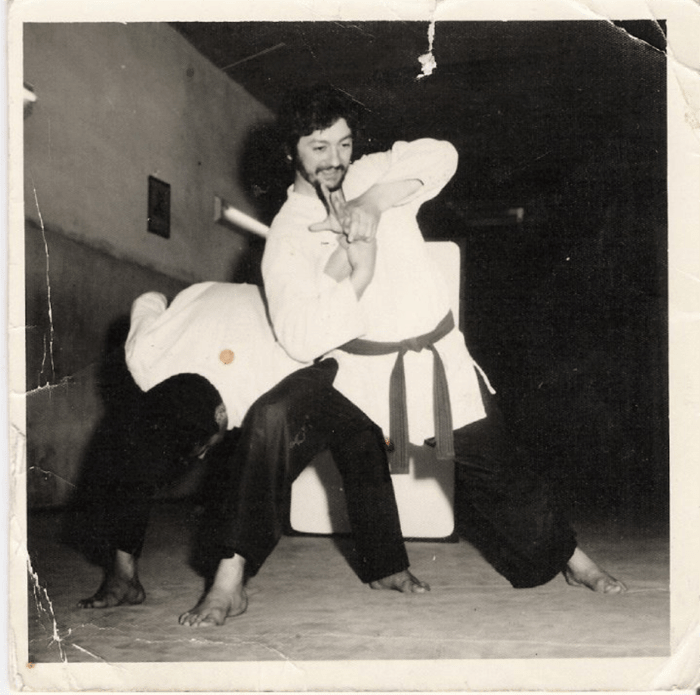
M. Rogelio I. M. Magliacano
(1970s)
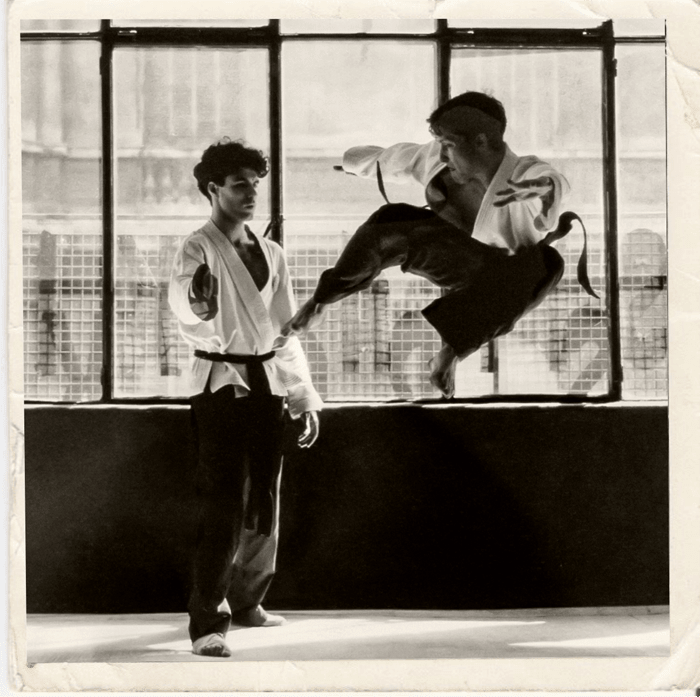
M. Nicolás Moyano and M. Fernando Sandri
(1991)
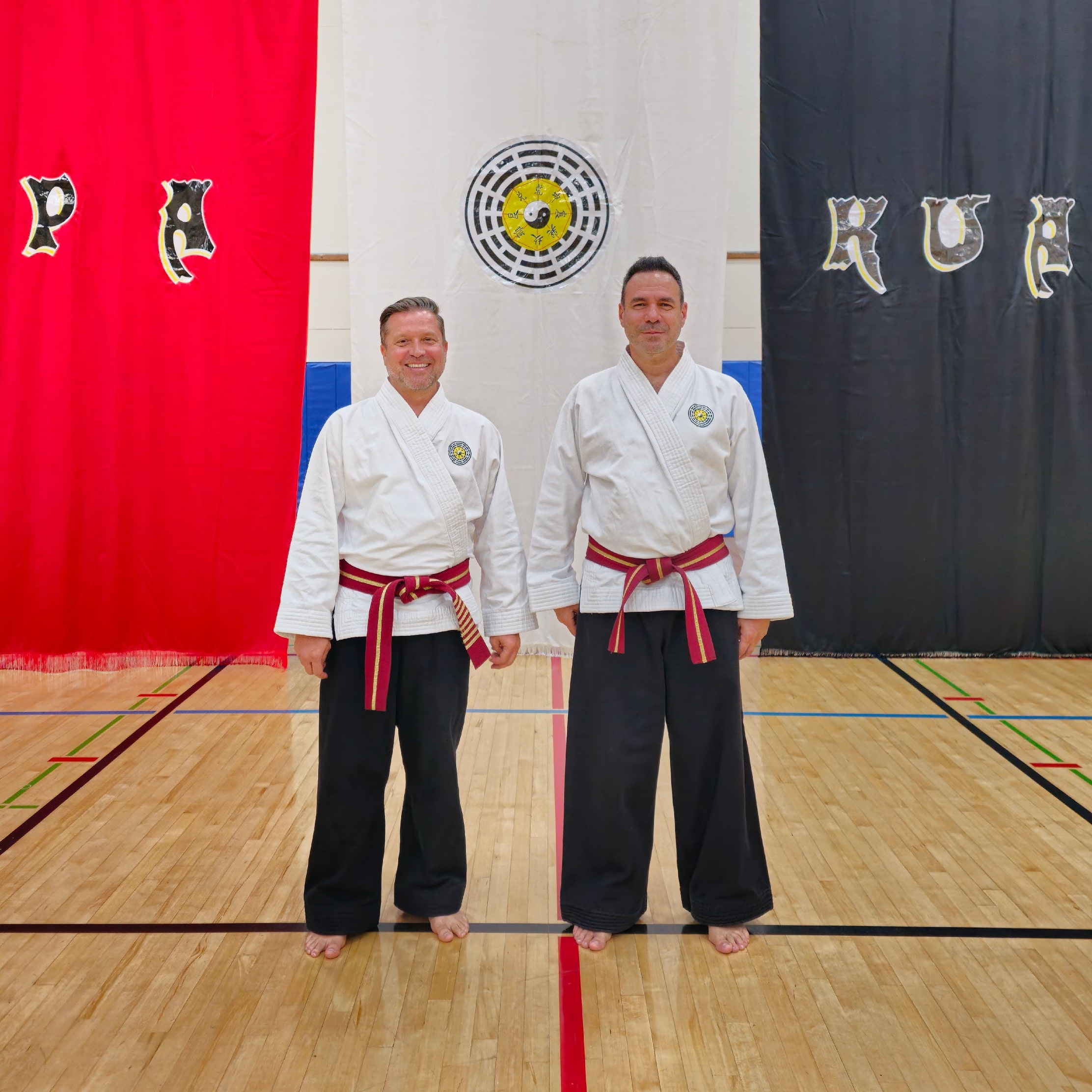
M. Fernando Sandri and M. Nicolás Moyano
(present day)
The origin of Pa-Kua knowledge
The oldest references related to Pa-Kua belong to Chinese cultural and mythological tradition.
One of the most widespread accounts attributes to Fu Xi the observation of certain patterns in nature from which the eight trigrams are said to have emerged. These symbols represent different states and processes of change and later became one of the foundations of the thought associated with the I Ching.
Beyond their legendary dimension, the trigrams express a central idea: reality is in a state of constant transformation, and human beings can learn to recognize these changes, understand them, and act more harmoniously in response to them.
The International Pa-Kua League studies these principles as part of a living tradition. Our goal is not to reproduce the past rigidly, but to preserve its essence and transmit it with clarity, responsibility, and practical value for people today.
Our purpose
To preserve, develop, and transmit Pa-Kua knowledge so that it may continue contributing to the integral development of people and the improvement of society.
We consider this knowledge to be a cultural and human heritage of extraordinary value. Therefore, we accept the responsibility of studying, practicing, and teaching it with fidelity, seriousness, and a permanent willingness to learn.
Our mission
To teach Pa-Kua knowledge through a system organized into Masteries, in which each class combines training, study, and practice so that students of all ages can develop physical, mental, and human capacities applicable to everyday life.
We promote excellence in teaching through:
- ongoing training for Instructors and Masters;
- continuous review of study programs;
- the improvement of our educational methods;
- individual guidance for each student;
- consistency in teaching across all countries where the League is present.
Our vision
We aspire for the International Pa-Kua League to continue being recognized as a worldwide reference in the preservation, development, and transmission of Pa-Kua knowledge.
We seek to distinguish ourselves through the excellence of our educational method, the human quality of our Instructors and Masters, and the positive impact our students generate in their families, communities, and societies.
We believe that, in an increasingly technological and sedentary world, integral development will become progressively more necessary. That is why we work to ensure that Pa-Kua continues to offer useful tools for developing health, strength, balance, autonomy, and responsibility.
Our values
The International Pa-Kua League welcomes everyone with the same respect, regardless of age, profession, nationality, physical condition, beliefs, or way of life.
Our purpose is for each student to find a space where they can learn, train, and develop according to their own possibilities.
Our teaching is based on the following values:
Respect, honor, and honesty
We understand that every educational relationship must be founded on respect, integrity, and consistency between what is taught and the way one acts.
Effort and merit
We value consistency, commitment, and effort as natural paths toward learning. Every responsibility, graduation, or recognition should correspond to the merit demonstrated throughout the training process.
Personal growth
Each student begins from a different point. The goal is not to compare oneself with others, but to discover and develop one's own potential.
Family and social responsibility
We recognize the family as a fundamental foundation of society and promote harmonious, responsible, and respectful relationships among its members.
Individual freedom
We respect each person's life project, beliefs, and decisions. We do not seek to impose a single way of thinking, but to help each student develop autonomy, judgment, and responsibility.
Protection of the most vulnerable
We promote care for children, older adults, students who are just beginning, and anyone who needs guidance or protection.
Cooperation before competition
We believe that individual growth is strengthened within a community. The progress of one student benefits the group, and the group encourages the progress of each student.
Our teaching principles
Techniques are the means; the student is the objective
In Pa-Kua, learning a technique is never the sole purpose. Every exercise, practice, and experience should contribute to the student's physical, mental, and human development.
Each person learns at their own pace
Classes are adapted to each student's abilities, needs, and possibilities. There are no entrance tests or special physical requirements to begin.
Everyone can learn.
Personal growth before competition
We do not promote competition among students. Each person is encouraged to compare themselves with who they were before and to pursue constant progress.
Teaching without violence
Fear may produce temporary obedience, but it does not generate deep learning or genuine confidence.
We promote an environment of respect, discipline, and high standards in which students can face challenges without being humiliated, intimidated, or subjected to physical, verbal, or psychological violence.
Guide rather than impose
Our method prioritizes experience. The Instructor does not seek to insistently correct every mistake, but rather to guide, provide examples, and create the conditions for the student to understand and improve progressively.
Teach by example
The values of Pa-Kua should be expressed in the daily conduct of our Instructors and Masters.
Example inspires. Words guide.
Assess to support learning
In the early stages, our assessments do not seek to assign a grade or compare all students against the same standard.
The objective is to observe each individual's process, understand how much of their potential each student has developed, and determine which next challenges will best support their progress.
Learning by teaching
We consider teaching to be one of the deepest ways to learn. By transmitting knowledge, the student develops responsibility, consolidates understanding, and begins to contribute to the growth of others.
Lifelong learning
In Pa-Kua, learning never stops. Each graduation represents a new stage, and each stage opens new possibilities for study, practice, and responsibility.
Unity between theory and practice
Knowledge gains value when it can be applied. Therefore, every concept should find practical expression, and every practice should lead to deeper understanding.
Excellence through continuous improvement
Honoring a tradition does not mean repeating it without change. It means understanding its essence and continually improving the way it is transmitted.
For this reason, the League maintains an ongoing process of training, review, and development of its educational programs and methods.
An international learning community
Pa-Kua schools are spaces where people of different ages, professions, and experiences train, study, and learn together.
Each student learns from their Instructors and Masters. Each Master continues learning. Everyone is enriched through shared experience.
Being part of Pa-Kua means joining a community based on:
- respect;
- practice;
- discipline;
- friendship;
- cooperation;
- a sense of belonging;
- continuous learning;
- personal growth.
I Ching: a structural reading of change
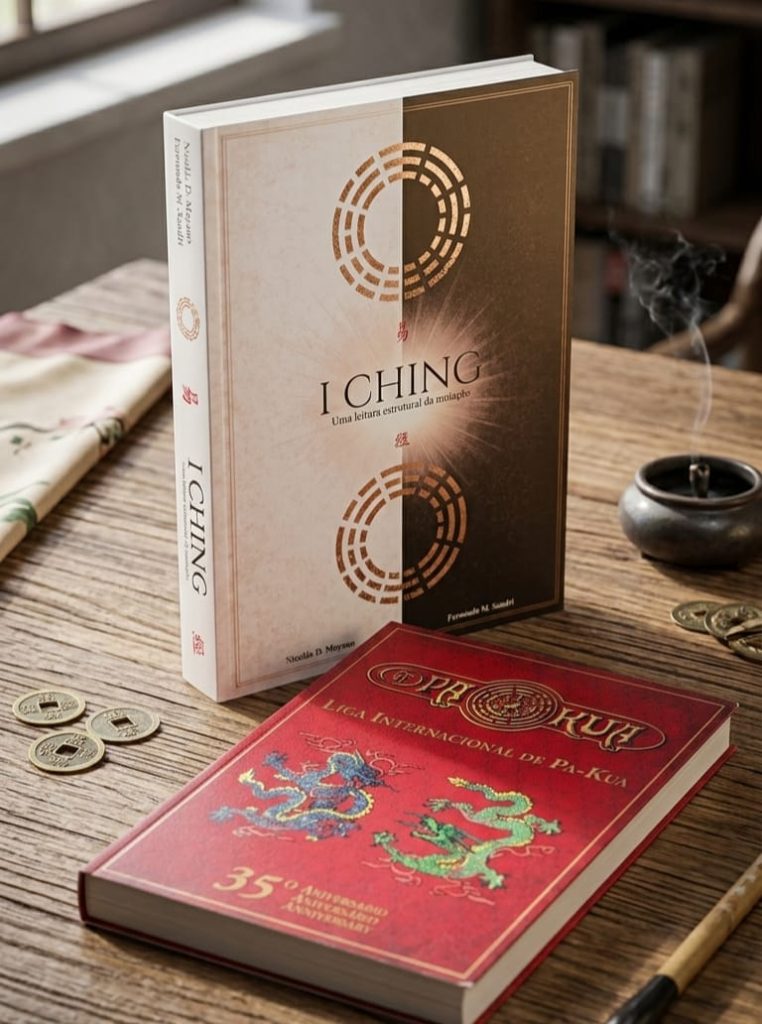
As part of the ongoing work of studying, preserving, and updating this body of knowledge, Masters Nicolás D. Moyano and Fernando M. Sandri present the book:
I Ching – A Structural Reading of Change
The work offers a clear and accessible approach to one of the most important texts in the Chinese tradition, relating its principles to the study of Pa-Kua and to an understanding of the processes of transformation present in life.
The book seeks to bring this tradition into contemporary language while preserving the depth of its principles and facilitating their practical application.

Pa-Kua ist mehr als nur ein Sport, es ist eine Familie in der wir uns gegenseitig unterstützten und weiterbringen. Die gemeinsame Zusammenarbeit über verschieden Kontinente sowie das physische Training sind der Grundstein für den eigenen Wachstum und das durchbrechen des Stillstandes. Pa-Kua hilft mir, selber zu wachsen, Menschen zu lernen und etwas dem Universum und der Welt zurück zu geben. Das Erlernen der Kunst der Wandlung fasziniert mich bis heute und fordert mich täglich dazu auf weiter zu lernen.

Iniciei no Pa-Kua há 21 anos, no meu pais natal (Argentina), nesse momento estava atravessando uma depressão profunda e o Pa-Kua me ajudou a seguir em frente, me fortaleceu como pessoa e como mulher. Fui descobrindo minha fortaleza, que eu era muito mas capaz do que achava. Hoje estou morando no Brasil, tenho minha escola e me dedico por intero a dar aulas desta arte maravilhosa - que também me ajudou a descobrir quem eu sou.
Há pouco mais de 2 anos estou aprendendo a me conhecer. Através das aulas de Yoga e de Acrobacia comecei a perceber do que sou capaz de realizar, sempre superando limites. Também adquiri mais foco e concentração. O ambiente da escola de Pa-Kua é acolhedor e amigável, sempre me sinto muito bem lá. É um lugar onde me conecto com corpo e mente e me mantenho saudável em todos os sentidos.

Comencé Pa-Kua en 1998, con 15 años de edad, con el objetivo de aprender a defenderme y divertirme. Luego de 25 años puedo decir que el Conocimiento Pa-Kua me ha ayudado en las mas variadas y dispares situaciones de la vida diaria y me permite también ayudar a otras personas. Me ha ayudado a conocerme más en profundidad y a tener la confianza necesaria para enfrentar el camino elegido. ¡La vida es una aventura!, y qué mejor que vivirla con las personas que comparten el mismo camino.
Pa-Kua se tornou parte da minha vida no ano passado, foi o lugar onde encontrei mais que amigos ou colegas, encontrei uma família, pude fazer atividades que me trazem coragem, confiança e auto estima, não consigo imaginar minha vida sem o Pa-Kua depois de tantos momentos lindos e realizações que tive aqui!
Pa-Kua me ajudou a ter mais confiança em mim mesma, a pensar antes de agir ou falar alguma coisa, a trabalhar em equipe. Como Mestre e dona de recinto aprendi a lidar com diferentes tipos de pessoas, a olhar com empatia os problemas dos outros e buscar formas de auxiliar no seu crescimento pessoal. Pa-Kua me ensinou a diferença entre líder e chefe, e aprendi como comandar as situações permitindo ainda assim que os outros cresçam e se desenvolvam da sua própria maneira e no seu próprio ritmo.
O Tai Chi do Pa-Kua foi um grande achado na minha vida. Sempre gostei de práticas como meditação, mas por vezes tinha dificuldade em me concentrar e estar no momento presente. Com a fluidez e leveza do Tai Chi, consigo me concentrar nos movimentos, treinar equilíbrio, respiração e ainda é um super complemento para minha prática de arte marcial. Tem sido excelente para minha ansiedade. Super recomendo!
Antes do início no Pa-Kua sempre fui sedentário e sempre tive problemas de auto estima com o meu corpo. Como desde pequeno tinha parado de praticar atividades físicas acabei desenvolvendo medo de quedas, saltos além de uma resistência física muito baixa. O Pa-Kua mudou muito todos estes medos na minha vida, além de autoconfiança e uma mudança radical de saúde. Pa-Kua também ajudou no processo de autoconhecimento, desde conhecimento físico/fisiológico sobre meu próprio corpo ao conhecimento do meu estado psicológico. Outro aspecto muito relevante sobre a inserção do Pa-Kua na minha vida foi conseguir trazer meus pais para a prática. Ambos iniciaram a praticar após uma longa insistência minha e isso aumentou muito a qualidade de vida deles.